Introduction
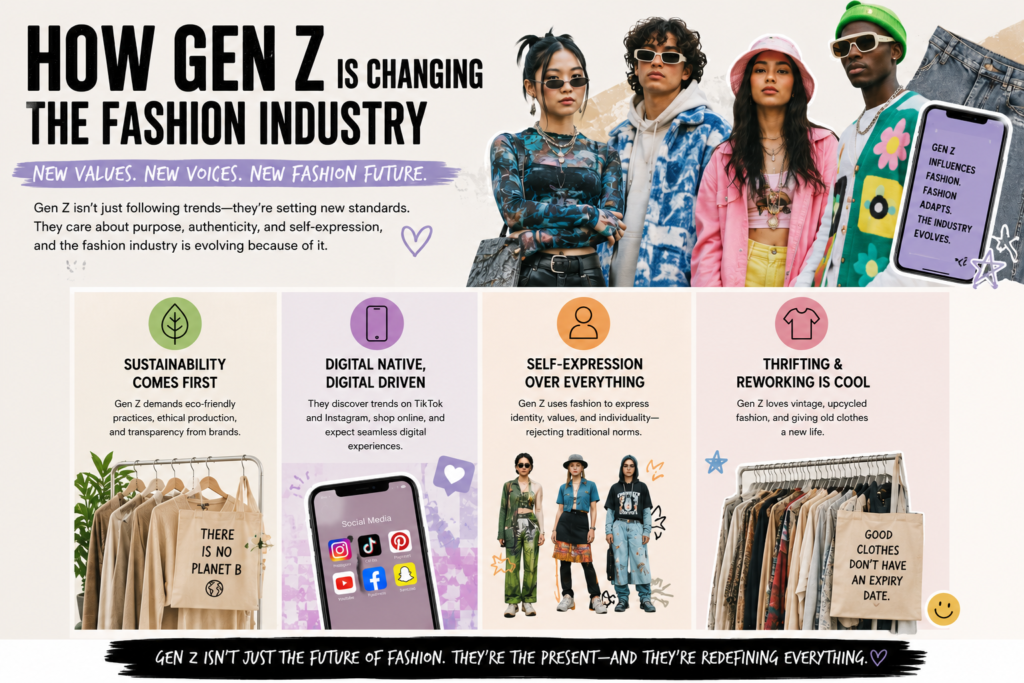
The fashion industry is experiencing a major transformation, and Generation Z is leading the change. Born between the mid-1990s and early 2010s, Gen Z has grown up in a digital world where social media, sustainability, and self-expression play a significant role in everyday life. Unlike previous generations, Gen Z consumers are not just following trends—they are creating them.
From sustainable shopping habits to the rise of streetwear and digital fashion, Gen Z is reshaping how brands design, market, and sell clothing. Their influence is forcing fashion companies to adapt quickly to meet new expectations.
The Rise of Social Media Fashion
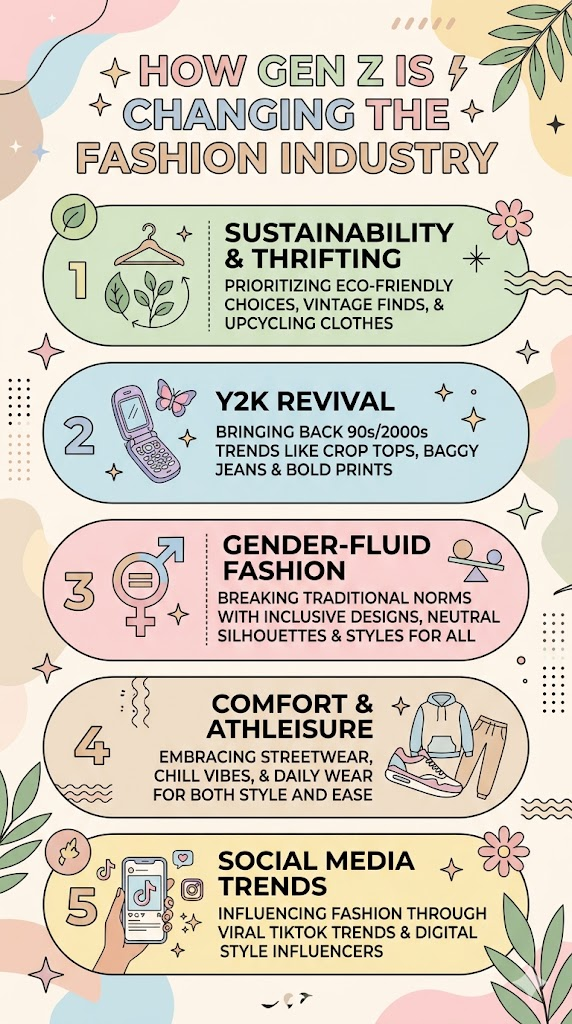
Platforms such as Instagram, TikTok, and Pinterest have become powerful fashion trendsetters. Gen Z discovers new styles through influencers, content creators, and viral videos rather than traditional fashion magazines.
A single TikTok video can turn an unknown fashion item into a global trend overnight. This has encouraged brands to create more engaging content and interact directly with consumers online.
Key Impact:
- Faster trend cycles
- Increased influencer marketing
- Greater focus on authentic brand storytelling
- Direct communication between brands and consumers
Sustainability Matters More Than Ever
Gen Z is one of the most environmentally conscious generations. Many young shoppers prefer brands that prioritize sustainable practices, ethical manufacturing, and eco-friendly materials.
Instead of buying large amounts of low-quality clothing, many Gen Z consumers are choosing:
- Second-hand fashion
- Vintage clothing
- Sustainable brands
- Recycled materials
Fashion companies that fail to address environmental concerns risk losing the attention of younger customers.
Streetwear Continues to Dominate
Streetwear has become one of the most influential fashion movements of the decade. Oversized hoodies, graphic tees, cargo pants, sneakers, and relaxed fits have become everyday essentials.
Gen Z values comfort and individuality over traditional fashion rules. This shift has blurred the lines between luxury fashion and casual streetwear, leading many luxury brands to adopt street-inspired designs.
Individuality Over Trends
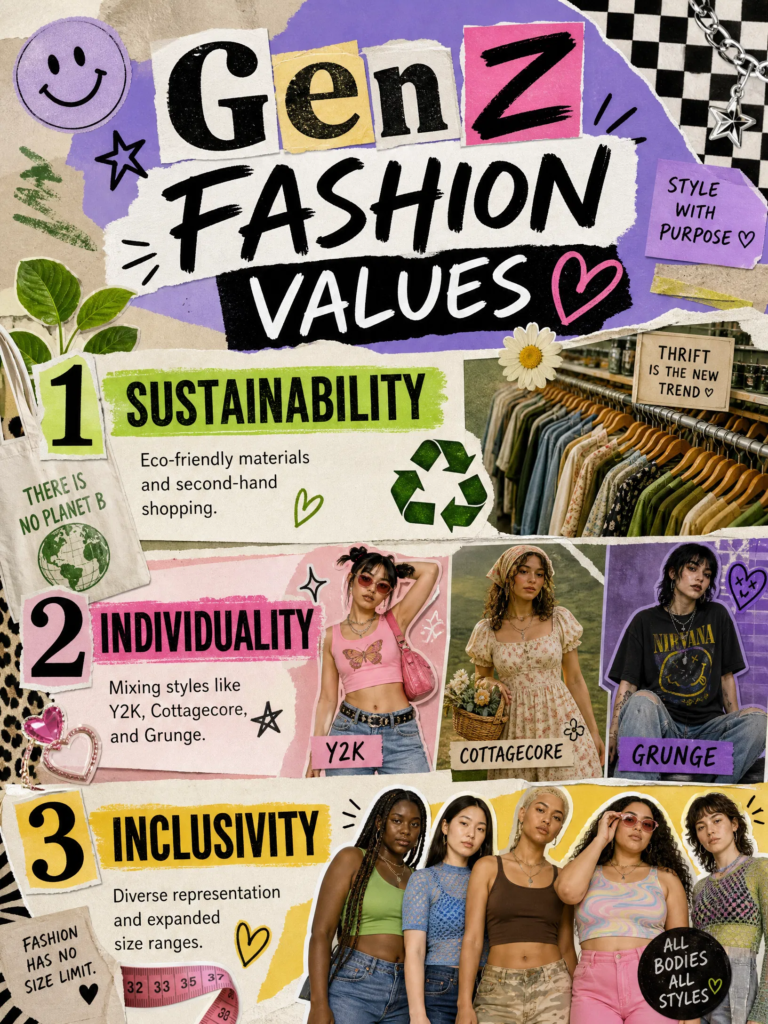
Unlike previous generations, Gen Z focuses heavily on personal expression. They mix different styles, colors, and fashion influences to create unique looks.
Popular aesthetics include:
- Y2K Fashion
- Minimalist Style
- Vintage Fashion
- Techwear
- Cottagecore
- Grunge Revival
Rather than following a single trend, Gen Z embraces diversity in fashion choices.
The Growth of Digital Fashion
Technology is becoming increasingly connected to fashion. Gen Z is more open to virtual clothing, digital fashion shows, and AI-generated designs.
Brands are exploring:
- Virtual try-ons
- Digital clothing collections
- AI-powered styling tools
- Augmented reality shopping experiences
As technology advances, digital fashion could become a major part of the industry.
The Power of Diversity and Inclusion
Gen Z expects brands to represent people from different backgrounds, body types, cultures, and identities. Fashion companies are responding by creating more inclusive campaigns and expanding size ranges.
Consumers now support brands that celebrate diversity and challenge outdated beauty standards.
What This Means for Fashion Brands
To succeed with Gen Z consumers, brands must:
- Embrace sustainability
- Maintain a strong social media presence
- Promote authenticity
- Support diversity and inclusion
- Create innovative digital experiences
Brands that understand these values are more likely to build long-term relationships with younger audiences.
Conclusion
Gen Z is not simply influencing fashion—they are redefining it. Their focus on sustainability, individuality, technology, and authenticity is shaping the future of the industry. As this generation gains more purchasing power, fashion brands will continue adapting to meet their expectations.
The future of fashion belongs to brands that listen, innovate, and embrace the values that matter most to Gen Z.