Introduction
Social media has transformed the fashion industry in ways that were unimaginable just a decade ago. Platforms like Instagram, TikTok, and Pinterest have become powerful trend-setting tools, influencing what people wear, buy, and share online.
Today, fashion trends spread faster than ever. A single viral post can turn an unknown style into a global sensation overnight. As social media continues to grow, it plays an increasingly important role in shaping the future of fashion.
How Social Media Changed Fashion
Before social media, fashion trends were mainly introduced through fashion magazines, television, and runway shows. Consumers often waited months before new styles reached stores.
Now, trends are discovered instantly through:
- Influencer content
- Fashion bloggers
- Viral videos
- Brand campaigns
- User-generated content
This digital shift has made fashion more accessible and interactive than ever before.
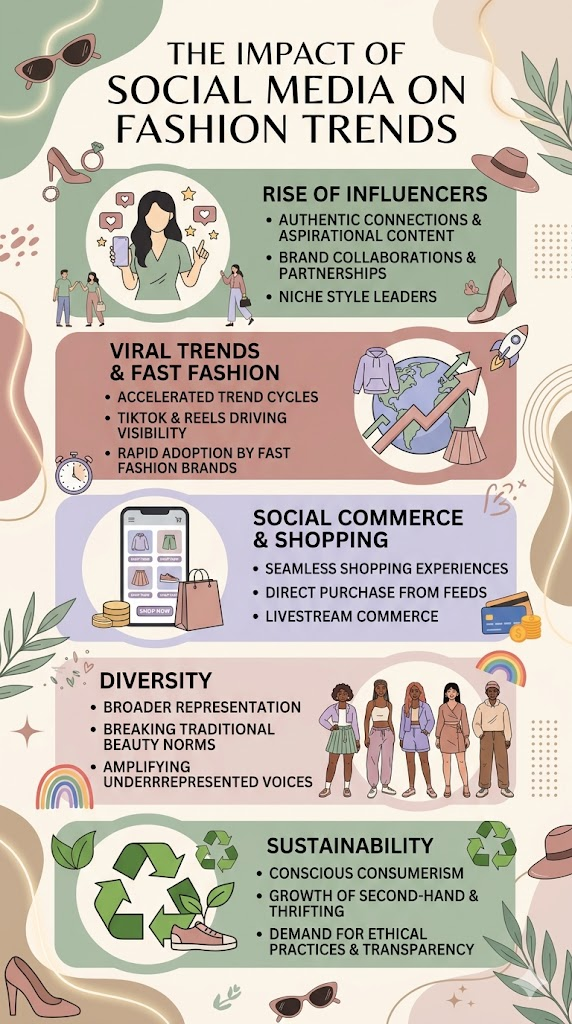
The Rise of Fashion Influencers
One of the biggest impacts of social media is the emergence of fashion influencers. These creators have built large audiences by sharing outfit inspiration, styling tips, and product recommendations.
Why influencers matter:
- They create relatable fashion content.
- Their recommendations feel more authentic.
- They help brands reach targeted audiences.
- They influence purchasing decisions.
Many consumers trust influencer recommendations more than traditional advertisements.

Viral Trends and Fast Fashion
Social media platforms can turn simple fashion items into must-have products within days.
Examples include:
- Oversized hoodies
- Cargo pants
- Chunky sneakers
- Y2K-inspired outfits
- Vintage streetwear
When a trend goes viral, fashion brands often respond quickly by producing similar styles, leading to shorter fashion cycles and faster product launches.
The Power of User-Generated Content
Consumers are no longer just buyers—they are content creators. Fashion enthusiasts regularly post outfit photos, styling videos, and fashion reviews online.
Benefits of user-generated content:
- Builds trust among shoppers
- Creates authentic brand exposure
- Encourages community engagement
- Increases product visibility
Brands often feature customer content in marketing campaigns, strengthening relationships with their audiences.
Social Commerce and Online Shopping
Social media has evolved into a powerful shopping platform. Consumers can now discover and purchase products without leaving their favorite apps.
Features driving social commerce include:
- Shoppable posts
- Live shopping events
- Product tags
- AI-powered recommendations
This seamless shopping experience has significantly increased online fashion sales.
Diversity and Representation in Fashion
Social media has encouraged greater diversity within the fashion industry. Consumers now expect brands to represent different body types, cultures, ages, and personal styles.
This shift has led to:
- More inclusive marketing campaigns
- Expanded size ranges
- Greater representation in fashion media
- Stronger connections with global audiences
Fashion is becoming more representative of real-world consumers.
Sustainability Awareness Through Social Media
Social media has also increased awareness about environmental issues within fashion. Consumers are becoming more informed about:
- Fast fashion waste
- Ethical manufacturing
- Sustainable materials
- Second-hand shopping
As a result, many brands are adopting more sustainable practices to meet customer expectations.
Challenges Created by Social Media
While social media offers many benefits, it also presents challenges for the fashion industry.
Some concerns include:
- Rapid trend turnover
- Increased pressure to follow trends
- Overconsumption of clothing
- Unrealistic beauty standards
Fashion brands must balance innovation with responsible marketing practices.
The Future of Fashion and Social Media
As technology continues to evolve, social media will remain a major force in fashion. Emerging innovations such as AI-generated content, virtual influencers, digital fashion, and augmented reality shopping experiences are expected to reshape the industry further.
Future trends may include:
- AI-powered personal styling
- Virtual fashion shows
- Interactive shopping experiences
- Digital clothing for social media and virtual worlds
The connection between fashion and technology will only become stronger.
Conclusion
Social media has revolutionized the fashion industry by accelerating trend discovery, empowering influencers, increasing diversity, and transforming online shopping. It has created a more connected and interactive fashion ecosystem where consumers play an active role in shaping trends.
As platforms continue to evolve, social media will remain one of the most powerful influences on fashion, helping define what styles become popular and how brands engage with audiences around the world.